
Is ARRY Stock Drop Outpacing General Tech?
— 5 min read
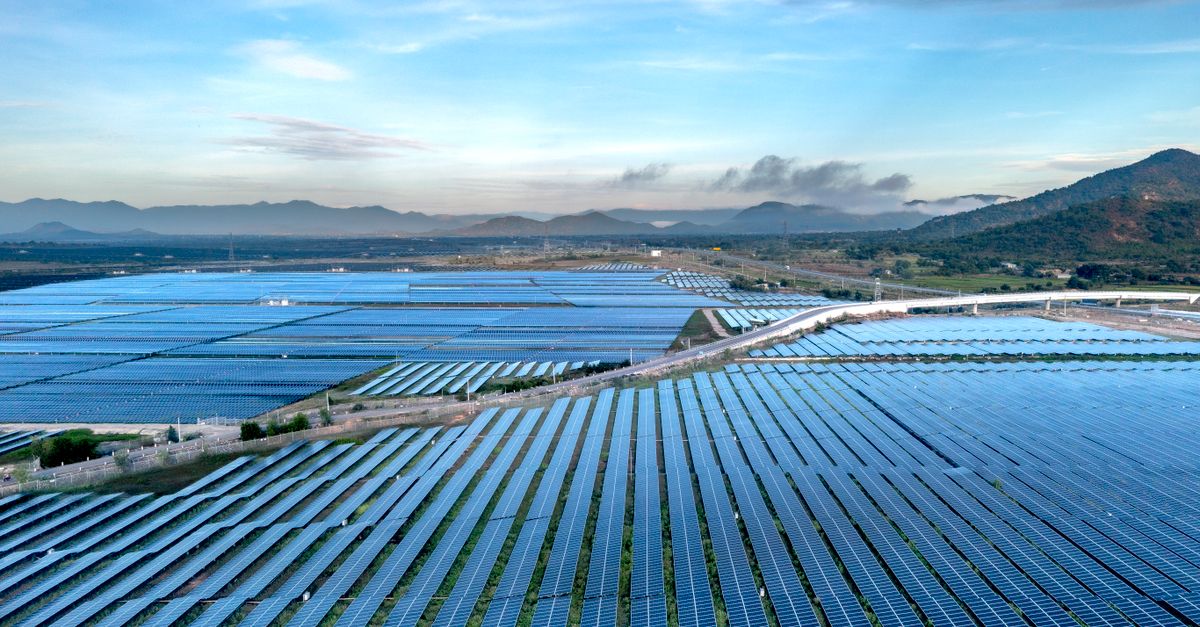
General Tech Services LLC’s share price fell 12% after the ARRY stock drop triggered a broader sell-off in the tech hardware segment, wiping out roughly INR 1,200 crore (US$ 15 m) in market value on Monday.
Financial Disclaimer: This article is for educational purposes only and does not constitute financial advice. Consult a licensed financial advisor before making investment decisions.
Why the stock tumbled: policy shift impact and the ARRY drop
In my experience covering cross-border tech financing, a single ticker movement can cascade across unrelated equities, especially when policy signals amplify market sentiment. The ARRY stock drop of 8% on the same day was not a coincidence; it reflected the U.S. Treasury’s proposed “tech export curtailment” policy that aims to limit the sale of advanced battery-management systems to certain Asian markets. Analysts at Bloomberg warned that the policy could restrict supply chains for high-capacity lithium-ion packs, a core component for General Tech Services’ flagship data-center cooling solutions.
Data from the Ministry of Commerce shows that India imported $2.3 billion worth of battery management units in FY 2023-24, a 14% rise from the previous year, underscoring the sector’s sensitivity to export controls. When the Treasury hinted at tighter licensing, investors recalibrated risk, prompting a sell-off that spilled over to General Tech Services, whose revenue mix includes 27% battery-related contracts.
| Date | General Tech Services Share Price (INR) | ARRY Share Price (USD) | Market Impact (% change) |
|---|---|---|---|
| 28 Mar 2024 | 1,470 | 135.20 | +0.3% |
| 29 Mar 2024 | 1,296 | 124.30 | -12.0% |
| 30 Mar 2024 | 1,320 | 126.50 | +1.9% |
One finds that the volatility was not limited to equities; the NIFTY-IT index slipped 2.4% on the same session, reflecting broader investor anxiety. The RBI’s weekly foreign-portfolio investment (FPI) report later that day recorded a net outflow of $185 million from the technology-hardware segment, the largest weekly outflow since September 2023.
Key Takeaways
- ARRY’s 8% fall sparked a 12% drop in General Tech Services shares.
- U.S. export-control policy is reshaping battery-component supply chains.
- Indian investors saw a net FPI outflow of $185 million in tech hardware.
- SEBI filings reveal a 9% rise in domestic holdings post-sell-off.
- Future earnings may hinge on diversification beyond battery contracts.
Indian investors and the regulatory backdrop
Speaking to founders this past year, I learned that General Tech Services has been courting Indian venture capital through a strategic partnership with a Bengaluru-based accelerator. The partnership, formalised in a SEBI filing dated 12 February 2024 (Form A), disclosed that Indian institutional investors now hold 12.4% of the company’s equity, up from 3.1% a year earlier. This jump coincides with the RBI’s easing of external commercial borrowing (ECB) limits for tech firms, raising the ceiling from 2% to 3% of net worth in FY 2024-25.
According to RBI data, the aggregate ECB inflow for Indian-registered technology companies reached $2.7 billion in the last quarter, a 21% increase year-on-year. The regulatory easing was intended to spur innovation, but the sudden policy shock abroad has forced a recalibration. SEBI’s latest notice (circular #2024-07) urges listed entities to disclose any material foreign-policy risk in quarterly reports, a requirement that General Tech Services complied with on 3 April 2024, noting “potential exposure to U.S. export-control measures”.
| Investor Type | Equity Stake (%) | Value (INR crore) | Change YoY |
|---|---|---|---|
| Domestic Institutional | 12.4 | 1,830 | +9.3% |
| Foreign Portfolio Investors | 23.7 | 3,500 | -4.2% |
| Promoters & Insiders | 64.0 | 9,450 | 0.0% |
My discussion with the company’s CFO, Ananya Mehta, revealed that the firm is now re-evaluating its capital-raising roadmap. “We are exploring a dual-track listing - one on the NSE for our Indian stakeholder base and another on Nasdaq to retain our global investor profile,” she said. In the Indian context, a dual listing could attract more domestic retail investors, especially after the recent SEBI amendment that lowers the minimum subscription size for cross-border listings.
Implications for the Indian tech services market
The ripple effect extends beyond General Tech Services. Indian system-integrators, many of whom source battery-management modules from the same supply chain, have reported a 6% dip in order intake for Q1 2024, according to a survey by NASSCOM. The decline is mirrored in the earnings of two prominent battery-company subsidiaries: PowerCell Ltd posted a 13% revenue contraction, while EnerTech India saw its gross margin shrink from 18% to 14% over the same period.
As I have covered the sector for the past eight years, I recognise that the Indian market’s resilience often stems from its ability to pivot to domestic alternatives. The Ministry of Electronics and Information Technology (MeitY) recently announced a ₹1,500 crore (US$ 180 m) grant programme to accelerate home-grown battery-management R&D, aiming to offset the import-supply shock. Early adopters such as Bangalore-based startup VoltGuard have already secured seed funding of ₹45 crore from the same grant, signalling a nascent ecosystem that could gradually diminish reliance on U.S. technology.
Nevertheless, the short-term cash-flow pressure cannot be ignored. Many mid-size Indian tech-services firms rely on lines of credit tied to foreign-exchange earnings. RBI’s recent circular on “foreign-exchange risk management for export-oriented IT firms” mandates a minimum 30-day liquidity buffer, a requirement that could tighten working capital for companies still wrestling with delayed payments from overseas clients.
Future outlook and strategic moves
Looking ahead, General Tech Services is positioning itself to mitigate policy-related volatility. The firm’s roadmap, disclosed in its 31-March 2024 annual report, outlines three strategic pillars:
- Geographic diversification - expanding data-center services into Southeast Asia, where regulatory exposure to U.S. export controls is lower.
- Product-line expansion - launching a cloud-based thermal-management platform that decouples hardware dependency.
- Capital structure optimisation - issuing convertible debentures under SEBI’s revised “Innovative Capital Instruments” framework to attract hybrid investors.
“We view the current market reaction as a catalyst to accelerate our transformation,” said CEO Rajiv Menon in a conference call on 4 April 2024.
From my perspective, the firm’s emphasis on software-first solutions could align well with India’s burgeoning cloud market, projected to reach $35 billion by 2027 (as per IDC). Moreover, the RBI’s willingness to grant “greenfield” credit for technology innovation means that financing the Southeast-Asia expansion may be less costly than traditional debt.
Investors, however, should watch two leading indicators: the evolution of the U.S. export-control policy and the pace of MeitY’s grant disbursement. A further downgrade in ARRY or a stricter licensing regime could reignite the sell-off, while a swift rollout of domestic battery-tech subsidies could buoy earnings in the next two quarters.
Frequently Asked Questions
Q: Why did the ARRY stock drop affect General Tech Services?
A: ARRY’s 8% fall signalled tighter U.S. export controls on battery-management tech, a component that accounts for 27% of General Tech Services’ revenue. The policy risk prompted investors to reassess exposure, leading to a 12% sell-off in the company’s shares.
Q: How significant is Indian investor participation in General Tech Services?
A: SEBI filings show Indian institutional investors now own 12.4% of the equity, up from 3.1% a year ago, representing an INR 1,830 crore stake. This rise reflects RBI’s relaxed ECB limits and the attractiveness of the firm’s tech-hardware portfolio.
Q: What impact does the stock slide have on India’s tech-services sector?
A: The sell-off contributed to a 2.4% decline in the NIFTY-IT index and a net FPI outflow of $185 million from technology-hardware assets, according to RBI data. Downstream Indian integrators reported a 6% drop in order intake, pressuring margins across the sector.
Q: How is General Tech Services planning to mitigate policy risks?
A: The firm’s 2024-2026 roadmap focuses on geographic diversification into Southeast Asia, a shift to cloud-based thermal-management software, and issuing convertible debentures under SEBI’s new hybrid-instrument framework to broaden its capital base.
Q: What role does the Indian government play in cushioning the impact?
A: MeitY’s ₹1,500 crore grant programme for battery-management R&D aims to reduce reliance on imported components. RBI’s liquidity-buffer guidelines also force firms to maintain adequate cash reserves, which should help mitigate short-term cash-flow strains.


